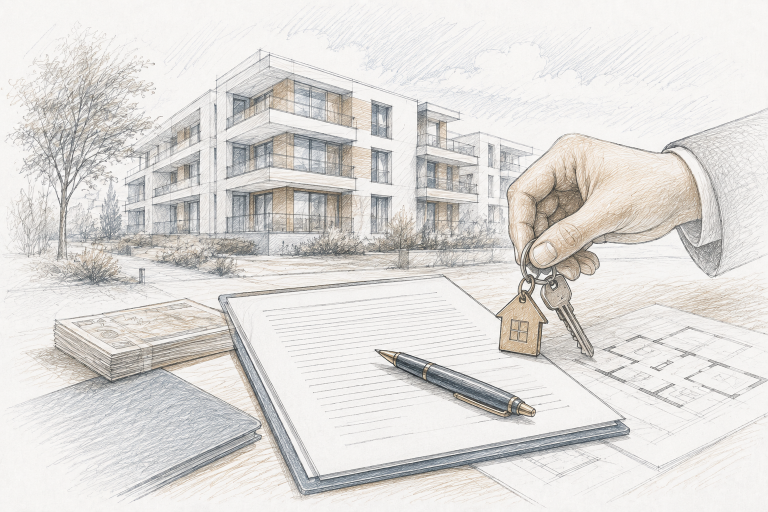

Buying an apartment with a mortgage sounds romantic only in the first sentence: “We found our dream apartment.” After that, the less romantic things begin — the deposit, preliminary agreement, bank, valuation, notary, mortgage, cadastre, taxes, and that eternal question: “Fine, but when do we actually get the keys?”
The good news is that the whole process does not have to be chaos. Once you break it down into steps, buying with a mortgage in Serbia starts to look much less like a minefield and much more like a well-organized project. Even better, Serbia today has a fairly clear institutional path: first you check the apartment, then you align the preliminary agreement with the bank, then come notarization, payment, mortgage registration, registration in the cadastre, and only then the best part — handover and keys.
Buying an apartment with a mortgage is not one single event, but a series of carefully connected steps. Skip one, and the whole process can slow down — or cost you more than you planned.
What Should You Check Before Paying the Deposit?
Before you take out the money and say, “Agreed,” first check whether the apartment is registered, whether the seller is actually registered as the owner, and whether there are any encumbrances on the property. You can check this through a public notary, through the eCadastre, and, if necessary, through GeoSrbija and the property title sheet. This is not a formality for the sake of formality — this is the first serious protection of your money.
When buying with a mortgage, this check is even more important than when buying in cash. The National Bank of Serbia states that banks offer loans for both registered and unregistered properties, but loans for unregistered apartments are generally more expensive, and in the case of new construction, a certain level of construction completion is also required. In plain English: if the legal status of the apartment is weaker or unclear, the bank will be more cautious, and you will have less room to maneuver.
That is why it is smart to ask three basic but life-saving questions before paying the deposit: who is the owner, are there any encumbrances, and is the apartment suitable for mortgage financing? It is not exactly the most romantic part of buying a home, but it is the part that prevents many headaches later.
Is the Deposit Paid Immediately, and What Must Be Included in the Preliminary Agreement?
In practice, when buying with a mortgage in Serbia, the process often starts with a preliminary agreement, because at the moment when the apartment is “reserved,” not all conditions for the final purchase agreement have been completed — above all, the bank’s processing and loan approval. The legal logic of a preliminary agreement is very serious: it obliges the parties to conclude the main agreement later, and it must contain all essential elements of that main agreement. In other words, a preliminary agreement is not “a small informal piece of paper,” but a document that legally binds you.
It is especially important to understand the deposit. Legally speaking, a deposit is a form of security for the performance of the contract and a sign that the contract has been concluded. The problem arises when people pay a deposit “on someone’s word” or based on a poorly drafted preliminary agreement. In that case, what they called a deposit may legally be treated only as part of the purchase price, not as a true deposit with all the consequences people usually expect.
That is why, when buying with a mortgage, the smartest approach is for the preliminary agreement to fully follow the real flow of the process: the deadline for loan approval, the deadline for signing the final agreement, who pays which cost, when the parties go to the notary, when the purchase price is paid, and when the keys are handed over. This is not nitpicking. It is how you avoid the famous scene: “But we thought that was understood.” In real estate transactions, nothing is understood — everything is written down.
The most expensive sentence in buying an apartment is: “We’ll sort it out along the way.”
What Does the First Conversation with the Bank Look Like?
When you go to the bank, do not look only at the question: “What monthly installment can I handle?” Look also at how much financing you can realistically obtain, for which property, with what down payment, and with what total costs. The National Bank of Serbia clearly states that banks define the conditions for approving housing loans through their own business policies, which means two banks may look at the same apartment and the same buyer in completely different ways.
What you need to compare is not only the nominal interest rate, but the EIR — the effective interest rate. The National Bank of Serbia explains that the EIR shows the real cost of the loan because it includes known cash flows and costs connected with using the financial service. Put simply: the nominal interest rate tells you how much the loan “costs on paper,” while the EIR tells you how much the loan actually costs in real life.
With housing loans in Serbia, you should also pay attention to the fact that they are often indexed through a currency clause. The loan is disbursed and repaid in Serbian dinars, but the obligations are adjusted according to the currency to which the loan is linked. This means it is not enough to look only at today’s installment. You also need to consider how your budget would behave if the interest rate or exchange rate changed.
The down payment is another important item. The National Bank of Serbia previously allowed banks, for the purchase of a first residential property, to approve a loan of up to 90% of the property value, which practically opens the possibility of a 10% down payment, while the general rule is 80% of the property value. But that does not mean every bank will automatically offer a 10% down payment to everyone — each bank still defines its own offer and risk assessment.
What Documentation Goes to the Bank and the Valuer?
Documentation differs from bank to bank, but one thing is almost certain: you will need documents about you as the client and documents about the apartment itself. And when buying with a mortgage, a valuer also becomes part of the process, because eGovernment clearly states that in this case it is necessary to engage a construction-sector valuer who gives an opinion on the value of the apartment. Based on that valuation, the bank decides how it views the property and how much money it is willing to release into the transaction.
If you are married, things become a little more serious and a little more “family-shaped.” When a mortgage is registered over an apartment that is jointly owned, the consent of both spouses is required for establishing the mortgage. The same applies to the sale of property that is jointly owned marital property. That is why it is better not to open this issue at the last minute, but at the beginning of the process.
What Happens When the Bank Approves the Loan?
When the bank says “approved,” many people think the job is done. In reality, that is only the moment when the story enters its most sensitive phase. After approval comes the signing of the loan agreement with the bank, followed by an appointment with the public notary for the mortgage, or the pledge statement. The Chamber of Public Notaries states that mortgage agreements and pledge statements are concluded in the form of a notarially certified document, and in some cases in the form of a notarial deed.
eGovernment further explains that after the agreement with the bank is concluded, the public notary prepares the mortgage agreement or pledge statement and submits it to the Republic Geodetic Authority through the eDesk system. In practice, this means the bank does not rely on your solemn promise that you will repay the loan. It registers its security over the apartment you are buying. Only after the mortgage is established does the bank release the funds.
In other words: the bank does not pay because it loves you, but because it is legally secured. And that is perfectly normal. A mortgage is a standard part of this process, not a sign that you are doing something suspicious.
What Does the Day of Notarization and Payment Look Like?
This is the part where the process looks like a well-directed film — or like bad improvisation, if it has not been coordinated in advance. eGovernment recommends that the buyer contact the bank in advance and organize payment for the same day as the appointment with the public notary. It even notes that having the buyer and seller use the same bank may speed things up and reduce the fee.
The flow looks like this: the real estate purchase agreement is notarized, then the parties go to the bank so the agreed purchase price can be paid, and then they return to the public notary with proof of payment. At that point, the notary certifies the seller’s consent allowing the buyer to be registered as the new owner of the apartment, and the notary handles the further procedure. eGovernment particularly emphasizes that it is important for the payment and the notary appointment to take place on the same day, so the whole process does not get extended by an additional month.
This is the moment when many buyers first feel that the apartment is really “theirs,” even though they are formally still waiting for registration and handover. It is not yet time for champagne on the living room floor, but it is time to take a deep breath.
How Much Money Do You Need Besides the Down Payment?
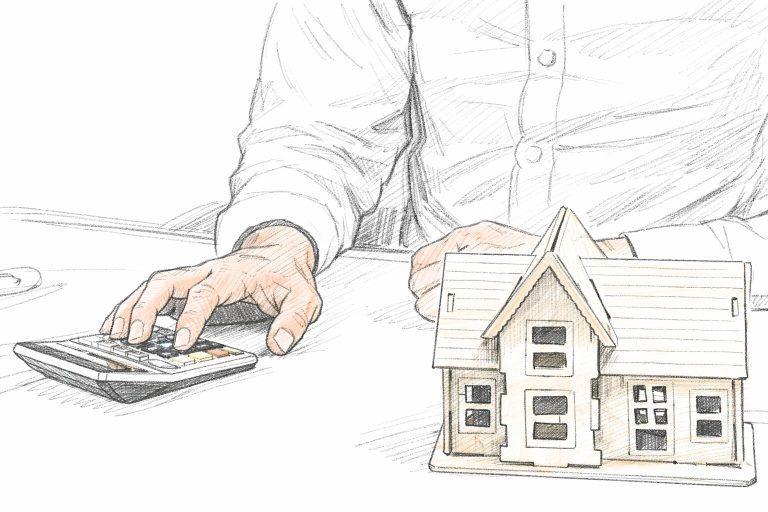
This is where the budget most often breaks. People collect the money for the down payment and think the job is done, only to realize there is a whole small universe of additional costs. The National Bank of Serbia warns that obtaining a housing loan involves additional costs, such as loan processing, exchange-rate differences, property valuation, notarization of the purchase agreement, establishment of the mortgage, and other fees. That is why you should not plan only for the “purchase price,” but also for the costs of the process.
For a resale apartment, there is also the tax on the transfer of absolute rights, which is charged at a rate of 2.5%. eGovernment explains that the legal taxpayer is generally the seller, but in practice the economic burden of this tax is most often borne by the buyer, because that is how it is usually agreed. With new construction, instead of transfer tax, VAT is included in the price, and the Tax Administration states that the sale of an apartment is subject to VAT at a rate of 10%.
In the illustrative example below, we calculate a resale apartment worth €100,000, a standard down payment of 20%, and transfer tax of 2.5%. When buying a first apartment, there are prescribed exemptions from transfer tax, while with new construction there is the possibility of VAT refund under the legally defined conditions.
| Item | Amount |
|---|---|
| Apartment purchase price | €100,000 |
| Down payment, example 20% | €20,000 |
| Bank loan | €80,000 |
| Example of deposit included in the price | €5,000 |
| Remaining own funds needed to complete the down payment | €15,000 |
| Tax on transfer of absolute rights, 2.5%, resale apartment | €2,500 |
| Valuation / notary / mortgage / insurance / bank fees | Variable |
If, for example, you are buying your first residential property and the bank approves a model with a 10% down payment, the calculation of your own funds may be easier — but this depends on the specific bank and loan conditions. Also, if you meet the conditions for a first-time homebuyer, the Tax Administration provides for tax exemption or VAT refund up to 40 m² for the buyer, plus up to an additional 15 m² per household member, under the prescribed conditions.
The most common mistake is not too small a salary — it is too small a plan. The buyer saves for the down payment and forgets the valuation, notary, mortgage, insurance, and tax.
What About Taxes and First-Home Benefits?
This is the part people often hear “from a relative” and then misunderstand. With a resale apartment, the Tax Administration states that a first-time homebuyer may qualify for exemption from the tax on transfer of absolute rights, under conditions that include being an adult, holding Serbian citizenship, having residence in Serbia, and not having owned, co-owned, or jointly owned an apartment in Serbia from July 1, 2006, until the date of notarization of the agreement.
With new construction, the logic is different: there is no transfer tax, because VAT is included in the price. A first-time homebuyer may, if they meet the prescribed conditions, request a VAT refund, also up to 40 m² for themselves and up to 15 m² per household member. The Tax Administration additionally emphasizes that the agreed price including VAT must be paid in full to the investor by transfer to the investor’s bank account in order for the right to be exercised in the prescribed manner.
One more detail people often forget: once you become the owner, property tax begins too, payable to the local tax administration. eGovernment states that the tax obligation arises at the moment of transfer of ownership, and in the case of a building under construction, at the moment the apartment is handed over. So it is not enough simply to buy the apartment — after that, its “tax life” begins.
When Are You Registered as the Owner, and When Do You Get the Keys?
Once the notary, bank, and mortgage steps are completed, the public notary electronically sends the documents to the cadastre. If the procedure is carried out through a public notary, the deadline for issuing the registration decision is five working days from the electronic delivery of the document. The decision is then sent to you by post, through your eMailbox on eGovernment, or you can download it from the electronic notice board of the Republic Geodetic Authority.
But here is an important difference many people confuse: registration in the cadastre and handover of the keys are not the same thing. You receive the keys when this has been agreed and when the apartment handover is carried out. That is why the seller’s move-out date, the date when the buyer takes possession, and the status of utility bills and equipment in the apartment must not remain in the “we’ll agree later” zone. This must be clearly defined already in the contractual phase.
In an ideal scenario, the keys are handed over immediately after payment and formal handover. In real life, this is sometimes the same day, sometimes a few days later, and sometimes after the agreed deadline for the seller to move out. The point is that the key is not an emotional category — it is a contractual item.
Where Do Buyers Most Often Make Mistakes?
The first mistake is paying the deposit before they have truly checked the apartment. The second is looking only at the monthly installment, not at the total costs and the EIR. The third is failing to coordinate the seller, bank, and notary so they work like one orchestra, instead of three different bands each playing its own song. The result is the same: delay, stress, and additional costs.
That is why the best approach is boring but effective: first check the property, then speak with the bank, only then prepare a precise preliminary agreement, and after that coordinate all appointments. Buying an apartment with a mortgage does not reward impulsiveness; it rewards good preparation.
Conclusion: How Do You Really Get from Deposit to Keys?
Buying an apartment with a mortgage looks complicated because it involves emotions, law, banking, and taxes — and that is quite an explosive combination. But once you know the order, things become much clearer: check the apartment, carefully regulate the preliminary agreement and deposit, compare banks by the EIR, coordinate the valuation and mortgage, schedule the bank and notary for the same day, resolve the taxes, and clearly define the handover.
And that is exactly why hiring a real estate professional is a huge help, not a luxury. A good agent can protect you from a poorly handled deposit, an unclear preliminary agreement, badly timed payment, mismatched deadlines, and an apartment that looks peaceful in the ad but performs acrobatics in the documentation. With a good agent, you get greater legal security, save time, and reach the best solution much more easily — not just an apartment, but a safe apartment purchase.