
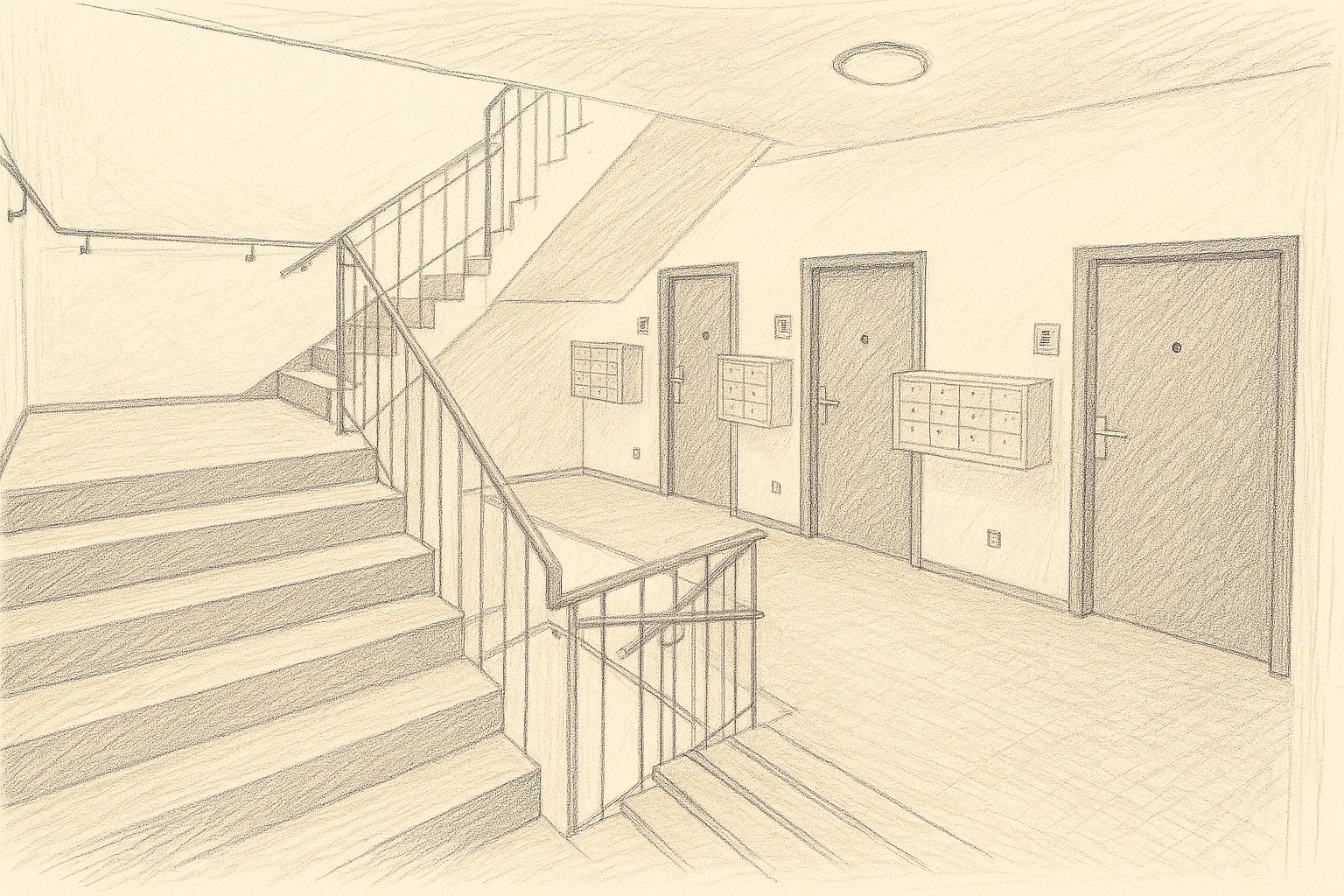
When buying, selling, or renting an apartment, it’s not enough to focus only on the unit itself. Understanding the individual and common parts of a building is essential to avoid legal, financial, and practical issues. This guide breaks down what each part means in the Serbian legal context and why it matters in real estate transactions.
What Are Individual (Private) Parts of a Building? 🏡
In Serbia, individual parts of a building refer to self-contained units that can be independently owned, used, rented, or sold. These include:
- Apartments
- Commercial units
- Garages or parking spaces
Each of these units is officially registered in the Real Estate Cadastre and legally recognized as separate property.
📝 Important: When you buy an individual unit, you also gain partial ownership of the building’s common areas—this is not optional or separate.
What Are Common Areas? 🤝
Common areas are spaces and structures used by all owners in the building. These typically include:
- Main entrances and hallways
- Staircases and elevators
- Roofs, façades, and building systems (plumbing, electrical)
- Utility infrastructure and shared rooms (storage, laundry)
In Serbia, these are considered undivided co-ownership among all unit owners—no single person can claim exclusive use.
🛑 Note: Every owner has both the right and the obligation to contribute to the upkeep of shared spaces.
Owners’ Rights and Responsibilities 🏘️
By purchasing a unit, you automatically obtain:
- Shared ownership of common areas
- Voting rights in the homeowners’ association (HOA)
- Co-ownership of the land the building sits on
You are also required to:
- Share the cost of maintaining common areas
- Respect decisions made by the HOA (usually by majority vote)
💡 Example: If the HOA decides to renovate the façade, each owner must contribute based on the size of their unit.
Why This Matters in Real Estate Transactions 💼
Before buying a property, you should:
✅ Inspect the condition of the building’s shared elements
✅ Confirm the legal clarity of co-ownership over land and common areas
✅ Check whether the building is well-maintained and actively managed
| Buyer’s Checklist | What to Check |
|---|---|
| Condition of common areas | Are the roof, stairs, and systems in good shape? |
| Ownership of the land | Is the land under shared legal ownership? |
| HOA organization | Is there a registered manager or board? |
🔍 Hidden issues in shared areas can lead to costly surprises—don’t skip this part of your due diligence.
Conclusion: Why It Matters 🧐
Understanding how residential buildings are legally structured is not just a technicality. It helps you:
- Avoid unexpected maintenance costs
- Make more informed purchase or sale decisions
- Protect your ownership rights
🏠 Final tip: Work with a licensed real estate professional who understands property law in Serbia. They can help you assess building documentation, detect red flags, and ensure you’re making a safe investment.


