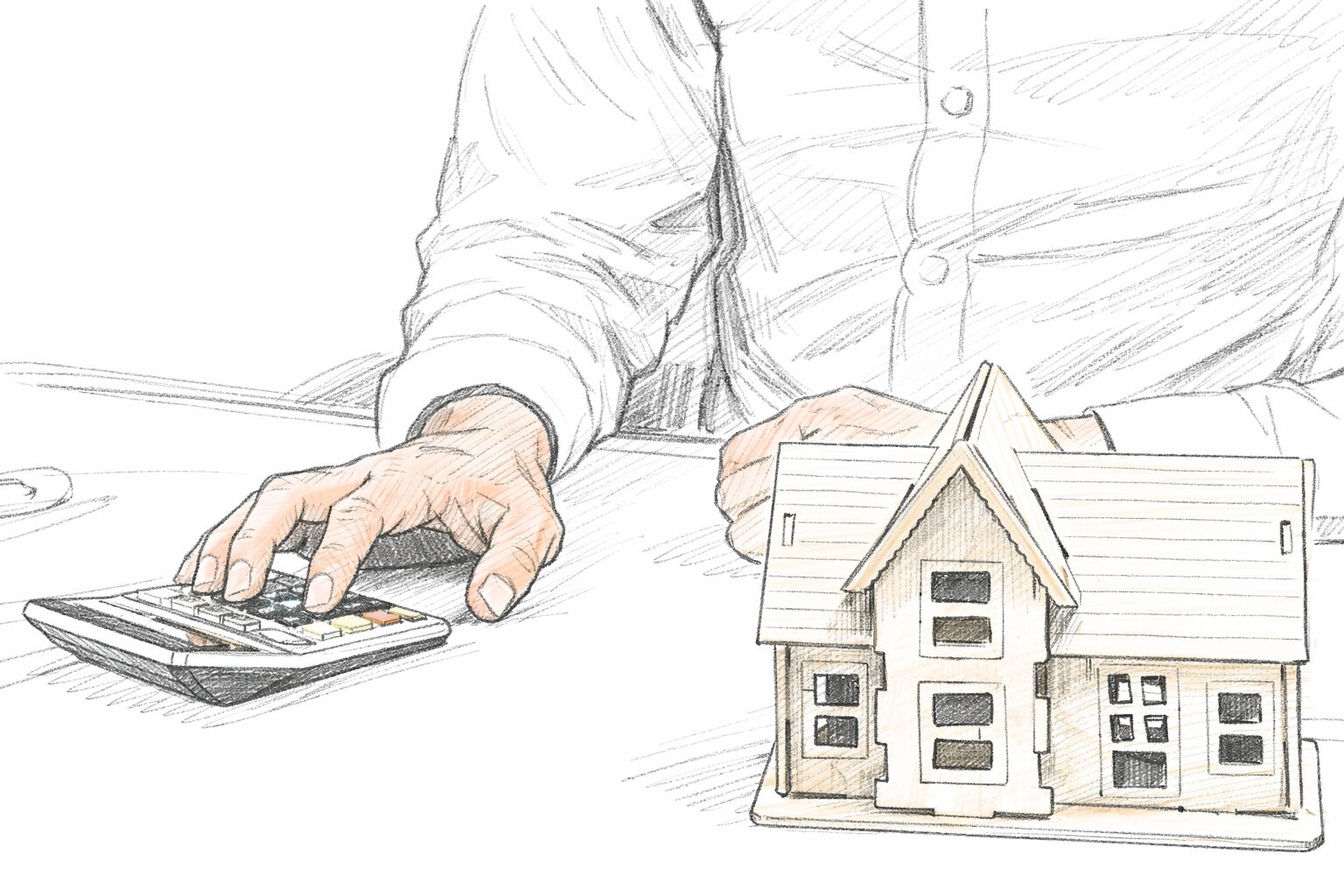
When people see the phrase “the apartment is under mortgage” in a listing, their first reaction is often: “Run.” 😅
And honestly, that instinct is not completely irrational. A mortgage sounds serious, legal, bank-related, and a little intimidating.
But here is the key point: an apartment with a mortgage is not automatically a bad apartment. What is bad is buying a property when you do not know exactly who owes what, how much is still owed, when the debt will be repaid, and when the mortgage will be deleted from the records.
Under Serbian mortgage law, a mortgage is a right attached to real estate that allows the creditor to collect its claim from the value of that property even if ownership changes. That is exactly why a buyer in Serbia must be especially careful.
In other words: you can buy an apartment with a mortgage in Serbia, but you cannot buy it on blind trust. A purchase like this is safe only when the procedure is clean, the paperwork has been checked, and the payment structure is set up so that the encumbrance on the property is resolved first — instead of simply hoping the seller will “sort it out later.” In Serbia, the Republic Geodetic Authority (RGZ), through its eKatastar system, allows public access to property data, and the Land Registry extract is precisely what lets you see what is registered against the apartment, including encumbrances and restrictions.
A mortgage itself is not a reason to walk away. An unclear procedure is. 🏠
What does it actually mean when an apartment is “under mortgage” in Serbia?
Put simply, it means the apartment has been pledged as security for someone’s debt, most commonly a housing loan. So no, the apartment is not “forbidden from being sold,” nor is it automatically problematic.
The problem starts only when the buyer forgets that the mortgage does not stay “with the seller” — it stays attached to the property itself until it is formally removed from the Serbian Land Registry. That is why both the law and banking practice in Serbia insist on a strict sequence of steps: check the current status, repay the debt, obtain the release document, and only then treat the title as fully clean.
The National Bank of Serbia (NBS), in its housing loan guidance, also reminds buyers that transactions like this must be looked at as a whole: the type of interest rate, whether the loan is indexed, the effective interest rate, the security instruments, whether insurance is mandatory, and how the property valuation works. That is an important reminder that buying an apartment with a mortgage in Serbia is not only a legal issue — it is a financial one too.
Is it actually safe to buy this kind of apartment in Serbia?
Yes — but only under certain conditions. That is probably the most honest answer.
Buying an apartment with a mortgage in Serbia can be a perfectly normal transaction when there is clear bank documentation, an exact outstanding debt amount, and a transparent mechanism under which part of the purchase price goes directly toward repaying that debt. After that, the bank issues the document needed to remove the mortgage.
In Serbia, RGZ states that mortgage deletion requires a separate request together with the release document. That means you should never rely on a verbal promise like, “Don’t worry, the bank will sort it out later.”
So a safe purchase is not a matter of luck — it is a matter of control. When you know what is registered in the cadastre, when you know the exact remaining debt, and when the contract is structured so the money goes exactly where it should, the risk becomes manageable.
When any of those three elements is missing, the risk quickly becomes very real. That is not fearmongering — it is just basic logic. If a creditor has a registered right over the apartment, the buyer must know exactly how and when that right will come to an end.
When is it a perfectly reasonable purchase?
It is reasonable when the seller is willing to show the documentation immediately, when the amount of debt is clear, when the bank is actively involved in the process, and when there is a precise repayment plan.
In those situations, the buyer is not buying a pig in a poke. They are buying an apartment with a known and solvable encumbrance. In practice in Serbia, buyers often ask for a confirmation of the outstanding loan balance and a bank document stating under what conditions the mortgage release statement will be issued after payment.
When should you hit the brakes immediately?
You should stop immediately if the seller avoids showing the Land Registry extract, does not know exactly how much they owe, says something like “Just pay me everything and I’ll close the loan later,” or if, besides the mortgage, there are other serious restrictions on the apartment that nobody can clearly explain.
At that point, the issue is no longer just the mortgage itself — it is the complete lack of control over the deal. And in real estate, when there is no control, the cost of stress rises faster than the price per square meter. ⚠️
A buyer should not be paying for uncertainty. A buyer should only be paying for a clearly defined process. 🔍
Which documents do you need to check before saying “I’ll take it”?
The first document is the Land Registry extract, meaning the verifiable status of the property in the Serbian cadastre. This is where you check who the registered owner is, whether the apartment is properly registered, what mortgage exists, and whether there are any additional notes, prohibitions, or other encumbrances. Through public access to eKatastar, RGZ allows users to search the property database and review registered information.
The second key document is the bank confirmation of the outstanding debt. Approximate figures are not enough.
You do not want to hear: “around €20,000.”
You do not want: “it’s not a big deal.”
What you want is the exact amount that must be paid to settle the obligation secured by the mortgage, together with the date on which that amount is valid. In practice, buyers in Serbia also ask for a letter or confirmation from the bank describing the conditions for issuing the mortgage release.
The third important element is a contract that reflects the logic of clearing the encumbrance. Every deal is different — that is true. But the principle is always the same: the contract must state how the money is paid, what portion of the purchase price goes to the bank to settle the debt, under what conditions the mortgage release document will be issued, and when the remaining amount goes to the seller. Without that structure, even the best apartment can turn into a bad deal.
The fourth element is a clear plan for what happens immediately after payment. In Serbia, RGZ clearly treats the registration and deletion of a mortgage as separate procedures, which means the deletion does not happen automatically. A closed loan is great news — but for the buyer, the real win comes only when the encumbrance has been formally deleted from the public records.
What does a safe purchase look like in practice in Serbia?
Let’s translate that into a normal real-life example.
Let’s say the apartment costs €120,000, and the seller still owes €38,000 on their old housing loan. In a safely structured transaction in Serbia, the buyer does not pay the full €120,000 to the seller and then hope the seller will go to the bank the next day.
Instead, the part of the money needed to repay the debt goes to the bank in the way set out in the documentation and the contract, while the remaining amount goes to the seller once the agreed conditions are met. After the debt is settled, the bank issues the document required to remove the mortgage, and then the mortgage is formally deleted from the cadastre.
That logic follows from the very nature of a mortgage and the procedure for deleting it in Serbia.
Here is what that can look like in a simplified example:
| Item | Amount |
|---|---|
| Purchase price of the apartment | €120,000 |
| Outstanding debt to the bank | €38,000 |
| Portion of the price used to settle the debt | €38,000 |
| Remaining amount paid to the seller | €82,000 |
This table is only an illustration, but the point is crucial: the buyer must know where every euro is going. Once you understand the flow of money, you understand where the risk is being reduced. If you do not understand the flow of money, you are basically financing someone else’s disorganization.
The most expensive mistake is not buying an apartment with a mortgage. The most expensive mistake is buying one without a clear plan for removing that mortgage. ✅
What if you are also buying with a loan?
That is where things become a bit like an orchestra with several conductors 🎻 — but it can still work perfectly well.
If the buyer is taking out their own housing loan in Serbia, then their bank also becomes part of the picture. That bank will look at the appraised value of the property, the security instruments, the insurance, the interest structure, and the total cost of the loan. The National Bank of Serbia specifically advises buyers not to look only at the monthly installment, but also at the effective interest rate and all the other terms under which the loan is being approved.
In situations like this, it becomes even more important for the sequence of steps to be crystal clear. The existing mortgage has to be resolved in a way that allows both the buyer and the buyer’s bank to know exactly when the property becomes “clean” or when a new registration tied to the buyer’s loan will take place.
This is no longer something to improvise over coffee with, “We’ll figure it out.”
This is a matter of precise coordination between everyone involved.
What does the bank say you should look at — and what do you actually need to understand?
In its housing loan guidance, the National Bank of Serbia keeps coming back to one very sober point: do not compare loans based only on the monthly installment.
Look at the effective interest rate. Look at whether the interest is fixed or variable. Look at whether the loan depends on a reference rate such as EURIBOR. Look at additional insurance requirements, the property valuation, and the security instruments.
That may sound boring, but that is exactly the difference between “I got a loan” and “I got a loan I can realistically carry for the next 20 years.”
There is another important point: market conditions do not stay frozen. Restrictions, interest rate conditions, and banking practice in Serbia can change, so you should not rely on old forum posts, old conversations, or “my neighbor told me.” You need a current offer from the bank and an up-to-date repayment plan at the moment you are actually entering the deal.
What was true last autumn may not be true this spring.
And when it comes to early repayment, Serbian banking rules allow borrowers to partially or fully repay a loan early, with a reduction in the total cost for the remaining period. That matters for both the buyer and the seller, because repaying the existing loan is often the heart of the transaction when an apartment is under mortgage.
When is a mortgage not a problem — and when is it?
A mortgage is not a problem when the apartment is properly registered, ownership is clear, the debt amount is confirmed, the bank is involved, and the deletion procedure is defined. In that case, it is simply a situation that can be resolved through a properly managed transaction.
It may not be the simplest apartment purchase in Serbia, but it is not necessarily a landmine either. It is more like an IKEA wardrobe: there are more parts than you expected, but if you follow the instructions, you still end up with a wardrobe. 😄
A mortgage is a problem when there is any fog around the basic questions:
Who exactly is the owner?
How much debt is outstanding?
Who issues the release document?
When will the mortgage be deleted?
Are there any other encumbrances?
If those questions do not have clear, documented answers, the goal is not to be a “brave buyer.” The goal is to be a smart buyer.
How do you calculate whether the risk is worth it?
A lot of people in Serbia consider buying an apartment with a mortgage because they see a chance to buy a good property that other buyers skip out of fear. And sometimes that really can be a good opportunity.
But do not look only at the asking price. Look at the full picture:
| Question | Example |
|---|---|
| Is the price lower than similar “clean title” apartments? | Yes, the apartment is €7,000 cheaper |
| How complicated is the procedure? | Moderate, the debt is clear and the bank is cooperative |
| How much extra time and energy will the transaction require? | More meetings, more coordination |
| Is the paperwork in order? | Yes, ownership and encumbrances are verifiable |
| Do you know the exact path to deleting the mortgage? | Yes, there is a bank confirmation and a payment plan |
The real formula is not complicated:
profitability = price savings – additional costs – stress cost – uncertainty cost
If the savings are small and the procedure is murky, that is not a good deal — it is an expensive hobby.
If the savings are decent, the paperwork is in order, and the process is clear, then an apartment with a mortgage in Serbia can be a perfectly sound decision.
So, should you buy an apartment with a mortgage in Serbia?
Yes — you can, but only if you are also buying control over the process.
Do not buy it just because someone told you “that’s normal.”
Buy it only after you verify:
- that the cadastral status is clear and verified,
- that there is an exact figure for the outstanding debt,
- that the payment structure in the contract is logical,
- that there is a document and a clear procedure for deleting the mortgage from the Serbian Land Registry,
- and that you understand the total cost of your financing, not just the monthly installment.
The core message is simple: an apartment with a mortgage is not automatically a bad choice — the bad choice is entering that purchase without proper professional preparation.
In the end, transactions like this are exactly where it pays to have someone by your side who understands the correct order of steps: a good real estate agent, and when needed, a lawyer and a banking adviser.
A skilled real estate professional in Serbia does not just “open the apartment door.” They help verify the logic of the transaction, identify risk points, speed up communication between the buyer, seller, bank, and cadastre, and save you both time and nerves. In practice, professional support matters enormously in exactly these kinds of transactions.
Because in real estate, the goal is not just to buy an apartment.
The goal is to buy it safely, intelligently, and in a way that lets you sleep peacefully after signing the contract. 🏡