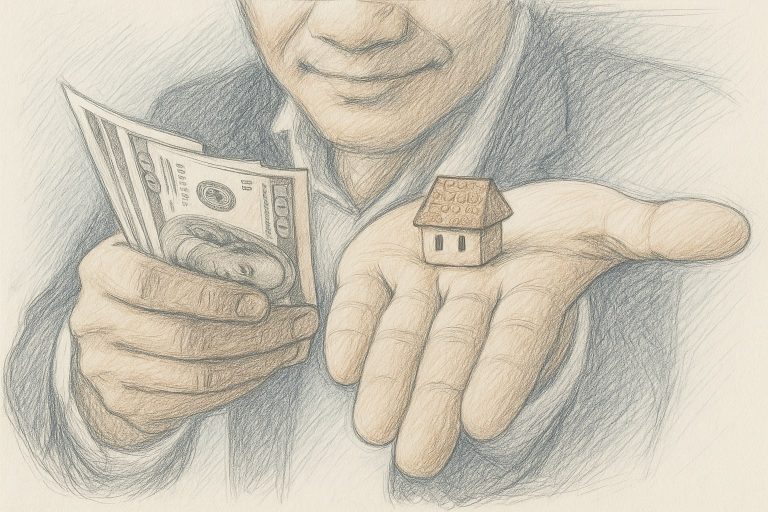

In today’s uncertain economic climate, one question keeps coming up:
“Is it better to buy a home or rent one?”
This isn’t just a theoretical dilemma — it’s one of the most important financial decisions faced by young professionals, families, and real estate investors in Serbia.
And the truth is: there’s no one-size-fits-all answer. The right choice depends on several factors — your financial health, long-term goals, the housing market, interest rates, tax implications, inflation, and more.
In this post, we’ll break it down clearly and simply:
✔️ key factors to consider
✔️ pros and cons of buying a home
✔️ pros and cons of renting
✔️ real-world numbers and comparisons
✔️ which option makes more sense in Serbia right now
✔️ practical tips for making the best decision
🤔 Why this question matters
💡 “Buy or rent” isn’t just a money question — it’s about your lifestyle and long-term security.
The choice you make could shape your financial stability for the next 10–30 years.
Make the wrong call, and you could find yourself stuck — with either overwhelming mortgage debt or rent payments that eat up your monthly income.
📊 1. Basic breakdown: Buying vs. renting
✔️ Buying a property
Pros:
- You’re building equity and owning a tangible asset 🏠
- Property values may appreciate over time 📈
- You have full control over your space — no landlords or surprise move-outs
- Potential tax benefits (depending on local laws)
- Option to rent out the property for passive income
Cons:
- High upfront costs (down payment, closing costs) 💸
- Long-term mortgage commitment (principal, interest, insurance, taxes) 🏦
- Maintenance and repair responsibilities
- Risk of property value declining
✔️ Renting a property
Pros:
- Flexibility — easy to relocate 🚚
- No need for a large down payment
- You’re not responsible for major repairs or property maintenance
- Ideal for short-term stays or uncertain living situations
Cons:
- You’re not building equity — rent is a sunk cost 💸
- Rents typically increase over time
- Landlords make the decisions
- You don’t own anything at the end of the lease term
💰 2. What does buying cost in Serbia?
Let’s look at a real example:
📍 Apartment in Belgrade
- Size: 55 m²
- Price per m²: €3,000
- Total property price: €165,000
Assume a 20-year mortgage, 20% down payment (€33,000), and a 4.5% fixed annual interest rate.
📆 Estimated monthly mortgage payment: ~€850
Total mortgage payments over 20 years:
20 years × 12 months × €850 = €204,000
- €33,000 down payment
➡️ Total investment: €237,000
🔸 In other words, after 20 years, you own the apartment — outright.
🟨 “Buying real estate is a long-term investment that can grow your net worth and offer lasting stability.”
🏘️ 3. What does renting cost in Serbia?
Let’s say you rent the same apartment:
📍 Monthly rent: €650
📆 Annual rent: €650 × 12 = €7,800
| Time Period | Total Rent Paid |
|---|---|
| 1 year | €7,800 |
| 5 years | €39,000 |
| 10 years | €78,000 |
| 20 years | €156,000 |
💡 On the surface, renting seems significantly cheaper.
But…
📈 4. It’s not that simple
🧠 a) Property values can appreciate
The same property you bought for €165,000 (and paid €237,000 for with interest) could be worth €500,000 in 20 years.
Sounds unrealistic? Look at the property price growth in Belgrade over the past decade — it’s very possible.
🧠 b) …But they can also decline
Not every home goes up in value. Location, infrastructure, building condition, and neighborhood development play major roles. A poorly maintained or poorly located property can lose value.
🧠 c) Rent usually goes up
In this example, we assumed a fixed rent for 20 years, but that’s highly unlikely.
As demand increases, so do rental prices. In 10 years, that €650 rent could easily hit €1,000/month or more.
🧠 d) Rent leaves you with nothing
Even if your property doesn’t appreciate, as a buyer you still own an asset.
As a renter? You walk away with nothing.
🟨 “Renting gives you flexibility, but buying gives you equity.”
📌 5. When does renting make sense?
💡 Renting is often the smarter choice when:
✔️ You’re staying short-term (2–5 years)
✔️ You don’t have enough saved for a down payment
✔️ Your career or lifestyle is mobile
✔️ You don’t want the responsibility of homeownership
📍 But if you’re planning to stay in one place for 10+ years, buying typically makes more financial sense.
📘 6. Smart decision-making tips
✔️ Speak with a licensed real estate agent or mortgage advisor
✔️ Set a realistic housing budget
✔️ Factor in all costs — not just rent vs. mortgage
✔️ Think about your long-term life plans
✔️ Track market trends — prices, demand, interest rates
🏁 Final verdict: What pays off more in Serbia?
📊 If you plan to live in one place long-term (10+ years) and you can afford the down payment and mortgage — buying is usually the smarter financial move.
💸 Renting is a solid choice if:
✔️ You want freedom and mobility
✔️ You’re unsure about your future plans
✔️ You want to avoid maintenance responsibilities
Either way, consulting with a real estate professional can help you avoid costly mistakes, save time, and move forward with confidence.