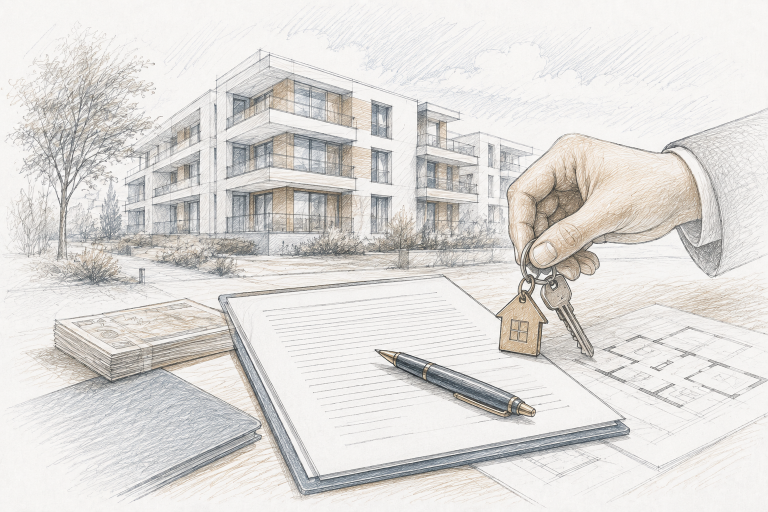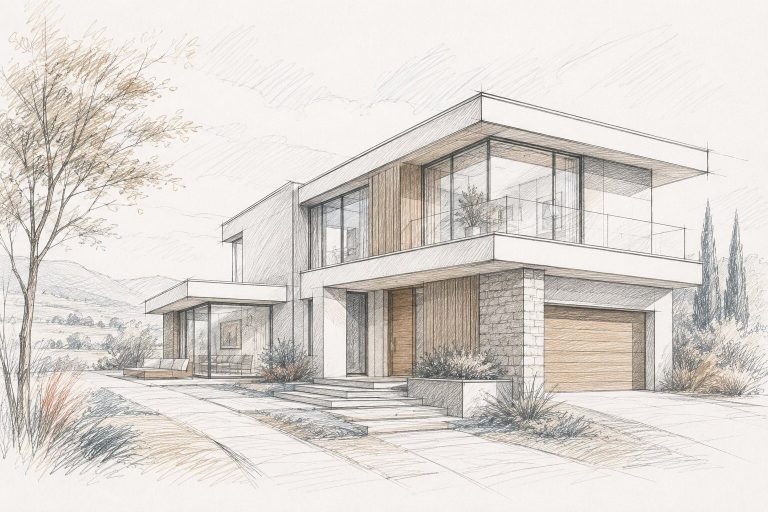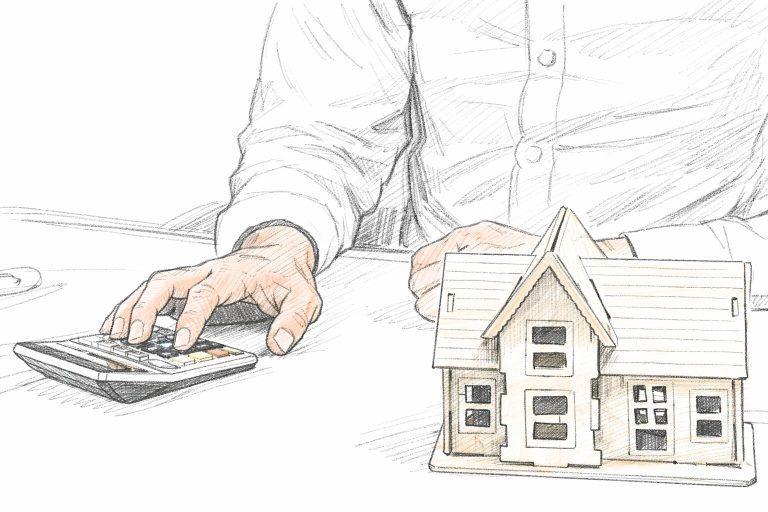

Belgrade has a few eternal dilemmas: is the city center better than New Belgrade, should coffee be grabbed quickly or stretched into a three-hour conversation… and, of course, is it smarter to buy a new-build apartment or an older one? 😄
At first glance, it seems like a simple question. New builds are new, they smell fresh, the elevator works without divine intervention, and the bathroom does not look like it survived three historical eras. Older apartments, on the other hand, often come with a better location, more generous room sizes, more “soul,” and sometimes a price that feels more approachable. But the real truth is much more interesting: in Belgrade, neither new nor old wins automatically. What wins is the option that fits your budget, lifestyle, risk tolerance, and five- to ten-year plan more intelligently.
And the market does not do much to make the choice easier. According to the Serbian Republic Geodetic Authority (RGZ), apartment prices in Serbia rose by 5.7% year-over-year in the fourth quarter of 2025, with both new builds and older apartments increasing at almost the same pace. In the Belgrade region, annual price growth reached 6.32%, and apartments in Belgrade alone accounted for €768.5 million in transactions in that quarter. In other words: the market is active, prices are high, and making the wrong choice is expensive.
What is the market in Belgrade actually telling us today?
What is especially interesting is that the data does not confirm the old popular belief: “New builds are always more expensive, older apartments are always more affordable.” In some parts of Belgrade, that is true, but not always. RGZ averages for Q4 2025 show, for example, that in New Belgrade the average price of new-build apartments was higher than that of older ones, while in Zvezdara and Zemun, average prices for older apartments were actually higher than the average prices for new builds. That does not mean older apartments are “objectively better.” It means micro-location, building quality, and the mix of specific apartments sold make a huge difference.
Here is what that looked like in several popular Belgrade municipalities:
| Municipality / Area | Older apartments avg. EUR/m² | New builds avg. EUR/m² |
|---|---|---|
| New Belgrade | 3,158 | 3,520 |
| Vračar | 3,542 | 3,670 |
| Zvezdara | 3,026 | 2,819 |
| Zemun | 2,892 | 2,604 |
| Voždovac | 2,694 | 2,900 |
| Čukarica | 2,621 | 3,003 |
| Palilula | 2,685 | 2,560 |
Source: RGZ Quarterly Report, Q4 2025
These numbers should be read intelligently, not literally. Averages depend on the number of transactions, the quality of the buildings, the micro-location, and whether what sold was a unit in a luxury development or an apartment that needed a full renovation. But the key point matters: in Belgrade, it is not enough to ask, “new or old?” You have to ask, “where exactly, in what kind of building, and at what total cost?”
🧠 The most expensive mistake is not buying a new-build or an older apartment. The most expensive mistake is buying the wrong combination of location, documentation, and total cost.
What are you really getting when you buy a new-build apartment?
When people say, “I want a new build,” they usually are not just buying an apartment. They are also buying peace of mind—the peace of mind that they will not move in and immediately be greeted by the need to replace installations, fix a worn-out bathroom, or solve the mystery of “why is this wall damp only when the Košava wind blows?” That is not a small thing.
The typical advantage of a new build is comfort: newer layouts, better windows and doors, more modern elevators, parking or a garage space, elevator access to the garage, a cleaner entrance hall, and more outlets placed where you actually need them rather than behind a wardrobe from 1987. For families with small children, people working from home, and buyers who do not want to spend the next six months living in construction chaos, that is a huge advantage.
Another major benefit is the predictability of initial costs. With a well-built new apartment, you often know that what awaits you at the start is mostly furniture, appliances, and maybe a custom kitchen—not a full-scale renovation. That matters especially when the buyer is taking out a mortgage and does not have the luxury of finding another €20,000 or €30,000 after the deposit and down payment just to make the place livable.
But new builds also come with very real downsides. The first is price. Even when the difference per square meter does not look dramatic, the total cost of the apartment, garage, maintenance fees, and other extras can easily go far beyond the original plan. The second downside is location: a lot of new developments are springing up in areas where infrastructure is still trying to catch up with investors. You may get a great apartment, but also a daily bonus package of traffic, a lack of nearby parking, an unfinished environment, or the feeling that you live “inside a project” rather than in a real neighborhood. The third downside is the risk that comes with buying during construction: delays, deviations from the specification, and the gap between glossy renderings and reality. RGZ defines new-build property on the primary market as a purchase from an investor—that is, newly built property, property under construction, or property that has never been used—which is exactly why buyers need to be especially careful when checking documentation and contract terms.
When does buying a new build usually make the most sense?
It makes the most sense for the buyer who says: “I do not have the nerves for contractors, I want as little uncertainty as possible, and I am willing to pay somewhat more so I can start living normally right away.” For that kind of buyer, a new build often really is the better purchase, even when it costs more on paper, because it saves time, stress, and unexpected repair work.
Put simply: a new build is a great choice when comfort matters more to you than romance with high ceilings. 😊
What are you really getting when you buy an older apartment?
Older apartments in Belgrade have one thing that no new development can “add” with even the best marketing: a location that has already proven itself. These are often parts of the city with established public transport, schools, daycare centers, markets, parks, trees, local shops, and that feeling that the neighborhood actually lives and breathes. You are not just buying square footage there. You are buying everyday life.
On top of that, older apartments often have layouts that buyers still love today: a separate kitchen, larger rooms, wider hallways, more natural light, and less wasted space. In practice, many buyers quickly realize that a 65 m² apartment in a well-designed older building feels larger and more functional than a brand-new apartment of the same size.
Another major advantage of older apartments is room for negotiation. In investor-led projects, the price list is often tight as a drum. With older apartments—especially when the seller wants a faster sale or the unit needs renovation—there is often more room to negotiate, particularly if the buyer knows how to estimate the real cost of refurbishment.
But older apartments can also become a very expensive lesson for people who look only at the listing. The walls may look decent while old electrical and plumbing installations are waiting behind them. The parquet floor may “hold on a little longer,” but the bathroom may not. The building may sit in a fantastic location, but have no elevator, a bad roof, poor maintenance, or a complicated ownership situation. With older apartments, you more often run into questions that are not glamorous but absolutely determine whether the deal makes sense: is everything properly registered, are there any encumbrances, does the actual square footage match the paperwork, are all required signatures in place, and are there any debts owed to the building or utility providers?
🏚️ An older apartment can be the best buy in the city—but only when you are buying quality, not a freshly painted headache.
When does buying an older apartment usually make the most sense?
It usually makes the most sense for a buyer who cares more about micro-location than the shine of a brand-new hallway, for someone who can see potential beneath old tiles and does not mind going through a renovation. It is also a great option for buyers who want more central areas of the city, but whose budget would not allow that in a new development.
Translated into plain English: if it matters more to you that you can walk to the school, the market, the tram stop, and your favorite bakery than that you have a smart intercom, an older apartment might be exactly the right choice.
Where do buyers most often go wrong?
The most common mistake is focusing on the price per square meter instead of the total cost of buying and moving in. And those are two very different things.
With new builds, it is important to understand the tax regime. Serbia’s Tax Administration states that the seller charges VAT at a rate of 10%, while first-time homebuyers may qualify for a VAT refund for up to 40 m² for the buyer, plus up to 15 m² per qualifying household member. With older apartments, instead of VAT, buyers pay a property transfer tax at a rate of 2.5%, with the possibility of a tax exemption for a first home under prescribed conditions.
Let’s translate that into “human language” with a simple illustrative example.
Let us assume both apartments have the same contract price of €180,000, that in the new-build case this is already the gross price including VAT, and that the new-build buyer is purchasing a first home with a spouse who also qualifies, so they can claim a VAT refund for 55 m² out of a total 60 m² apartment.
| Item | New build | Older apartment |
|---|---|---|
| Contract price | €180,000 | €180,000 |
| VAT / tax | VAT included in price | +2.5% transfer tax |
| Total VAT included in gross price | €16,363.64 | — |
| Possible VAT refund (55/60 m², illustrative) | about €15,000 | — |
| Property transfer tax | — | €4,500 |
The point of this table is not to say that a new build is automatically cheaper. The point is to show how much taxes and tax relief can change the math. In practice, after that comes the part listings do not like to highlight: with older apartments, you often also need to invest in the bathroom, kitchen, windows, floors, or installations. And that is where the difference can reverse very quickly. The tax rules in this example are based on a 10% VAT rate, a 2.5% transfer tax rate, and the 40 m² + 15 m² per household member rule; the arithmetic is illustrative and based on a gross price of €180,000.
In other words, the apartment that looks “more affordable” in the listing can easily end up costing more once you add taxes, renovation, and the time it takes to organize everything. And time, to be fair, is no small expense in Belgrade anymore. 😅
Is a new build always the safer purchase?
No. And this is a very important part of the story.
A new build feels safer because it is new, but a new thing is not automatically a good thing. When buying from an investor, you need to look closely at the documentation, construction status, timelines, payment structure, equipment specifications, termination terms, penalties, and whether what you are buying actually matches what you think you are buying. Especially when buying during construction, the buyer must understand that they are not just buying a future apartment—they are also buying the future outcome of the project.
Older apartments, on the other hand, seem riskier because they are older, but they can often be legally and functionally more stable when the building has already passed the test of time, the apartment is clearly registered, the neighborhood is established, and you can see with your own eyes how the building actually functions. So the question is not, “which is safer by definition?” The real question is: which one has been more thoroughly verified before signing?
How do mortgages change this decision?
For buyers using financing, the story of new builds versus older apartments is not just about walls. It is also about the bank. Serbia’s National Bank introduced limits on maximum mortgage interest rates for 2026, and at the same time, the state-backed program for young buyers purchasing their first residential property was supported, with a down payment of 1%, lower than the standard levels that had previously dominated.
Why does this matter? Because a buyer who qualifies for more favorable financing or tax incentives may see new builds and older apartments very differently from a buyer paying fully in cash. For some people, a new build may be more realistically accessible than it appears at first glance. For others, an older apartment may remain the better option because it offers a better location and a smaller loan burden. So this is not a decision to make with your heart alone. It has to be made with a calculator too.
Which option is better for whom?
Here is the fairest possible answer:
| Type of buyer | More likely better choice | Why |
|---|---|---|
| First-home buyer who wants peace of mind and a quick move-in | New build | Fewer immediate repairs, more comfort, easier logistics |
| Family that values school access, transport, and an established neighborhood | Older apartment | Often a stronger location and greater everyday practicality |
| Buyer with a limited budget but willing to renovate | Older apartment | More room for negotiation and customization |
| Buyer who does not want uncertainty with contractors | New build | Fewer hidden costs right after purchase |
| Investor buying to rent out | Depends on micro-location | For rentals, location often matters more than year of construction |
That is exactly where the real truth emerges: there is no universal winner, but there absolutely is a wrong choice for the wrong buyer. And that is what costs the most.
So what really is the better buy in Belgrade?
If I absolutely had to give a decisive answer without diplomatic hedging, I would put it like this:
A new build is the better purchase for people who want predictability, comfort, as little additional investment as possible, and who can afford to pay a small or moderate premium for an easier life after the purchase.
An older apartment is the better purchase for people who believe location is king, who know how to recognize the potential of a building and an apartment, and who are willing to accept renovation as the price of getting into a better neighborhood or securing stronger long-term value.
But there is also a third, and most important, sentence:
In Belgrade, a top-quality older apartment in a great location is often a better buy than an average new build in a poor location—and vice versa, a well-executed new build can be far smarter than an overpriced older apartment that demands expensive renovation.
That is why the real answer is not: “What is generally better?”
The real answer is: “What is better for me, within this budget, in this location, with this documentation, and with this life plan?”
📌 You are not just buying an apartment. You are also buying the neighborhood, the costs, the pace of life, the level of stress, and the chance of selling or renting that apartment well one day.
Conclusion: buy smart, not impulsively
The most successful buyers in Belgrade are not the ones chasing the label “new build” or “older apartment.” They are the ones who calmly compare the location, legal status, total cost, building quality, and their family’s actual needs. Today’s market is active enough and expensive enough that there is no longer room for buying “based on gut feeling” without serious due diligence.
That is why hiring a real estate professional is more than just convenient help—it is often the difference between a good decision and an expensive mistake. A good agent can save you time, filter out bad listings, spot a problem before you put down a deposit, guide you toward the right micro-location, help in negotiations, and make the buying process safer and more efficient. And when you are buying something that will consume years of savings or a large part of a mortgage, that is the kind of help that truly matters. 🏡